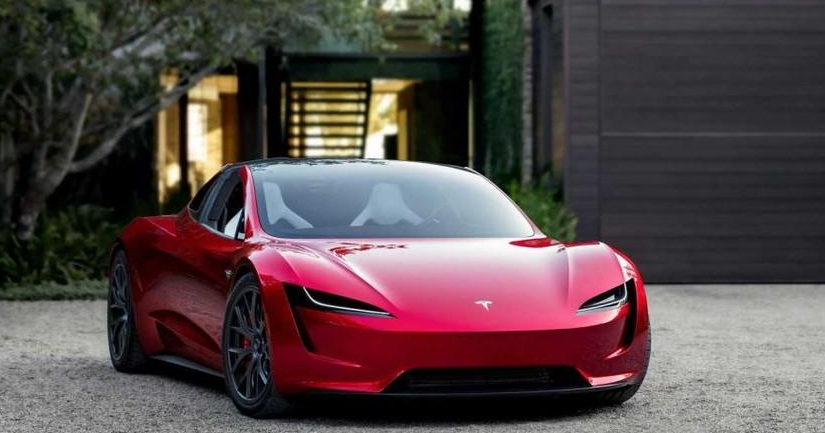
Let's cut to the chase. If you're asking "Who is no 1, BYD or Tesla?", you probably just saw a headline about quarterly sales. BYD sold more cars last year. Full stop. That makes them number one in volume, right? Well, not so fast. Declaring a single winner in this race is like calling a basketball game after the first quarter. It misses the strategy, the long game, and what the scoreboard doesn't show. The real answer depends entirely on what you mean by "number one." Is it about pure sales volume today? Technological bragging rights? Profitability? Global brand power? Or future investment potential? Strap in, because we're going beyond the headline numbers to find out.
Your Quick Guide to the EV Showdown
Defining 'Number One': It's More Than Just Sales
This is the first mistake everyone makes. They see a sales chart and declare a champion. In the auto industry, especially one being revolutionized by tech, leadership has layers.
Think about Apple and Samsung for a second. Samsung often sells more smartphones globally. But Apple captures the vast majority of the industry's profits and sets the design and ecosystem standard that others follow. Who's "number one"? It depends if you're counting units or dollars and influence.
The same dynamic is playing out with BYD and Tesla.
- Volume Leader: This is the simplest metric. Who put the most battery-powered vehicles on the road this quarter, this year?
- Technology & Innovation Leader: Who is pushing the boundaries? Who owns the core intellectual property? Whose software defines the experience?
- Profit & Margin Leader: Selling cars is one thing. Making good money on each one is another. This shows business efficiency and pricing power.
- Brand & Cultural Leader: Who has the mindshare? Whose name is synonymous with "electric car" globally? This drives premium pricing and customer loyalty.
BYD wins decisively on the first point. The others? That's where the debate gets spicy.
The Sales Crown: BYD's Dominance in Volume
Let's give credit where it's due. BYD's execution has been phenomenal. They didn't just beat Tesla in sales; they left them in the dust in terms of pure growth rate from a standing start.
The data is clear. In 2023, BYD sold over 3.02 million new energy vehicles (NEVs), which includes pure EVs and plug-in hybrids (PHEVs). Tesla delivered about 1.81 million vehicles globally. If we look at just pure battery electric vehicles (BEVs), Tesla still had a slight edge in 2023, but BYD closed the gap dramatically and has since overtaken them in subsequent quarters. Their secret weapon? A brutally efficient vertical integration strategy.
While Tesla struggled with production hell for the Model 3, BYD leveraged its industrial might to pump out a vast lineup of affordable cars, sedans, and SUVs perfectly tuned for the Chinese market. The BYD Seagull, starting under $10,000, is a masterpiece of cost engineering that no Western automaker can currently touch. Their BYD Han and Tang models compete directly with Tesla's Model 3 and Model Y in China, often winning on price and luxury features.
So, on the volume front, BYD is the undisputed king. They have scaled faster than anyone predicted.
Technology and Brand: Where Tesla Still Shines
This is Tesla's home turf. Ask someone in Berlin, Los Angeles, or Sydney to name an electric car, and "Tesla" is still the first word that pops up. Elon Musk, for all his controversies, built a brand that stands for innovation, performance, and a tech-forward lifestyle. BYD's brand, historically, stood for affordable batteries and taxis. That's changing, but the gap is wide.
Tesla's Moats: Software and the Supercharger Network
Tesla's real lead isn't in battery chemistry (BYD's Blade battery is excellent and very safe), but in software integration and infrastructure.
Full Self-Driving (FSD) & the Software Stack: Love it or hate it, Tesla has collected more real-world driving data than arguably any other company. Their investment in a unified software platform that controls everything from the infotainment to the driving assists is years ahead. BYD's vehicles use good hardware, but their software experience is often described as functional, not revolutionary. For many tech-focused buyers, Tesla's over-the-air updates and FSD potential are key selling points.
The Supercharger Network: This is a colossal, underrated advantage. Tesla built a reliable, fast, ubiquitous charging network globally. While they've begun opening it to other brands, the seamless integration for Tesla owners is a huge relief from "range anxiety." BYD relies on third-party networks in China (which are excellent) and is building its own abroad, but it's playing catch-up on a global scale.
Performance & Aspiration: The Tesla Model S Plaid is a halo car. The Cybertruck is a cultural phenomenon (for better or worse). These vehicles, even if they don't sell in huge volumes, keep Tesla in the headlines and define it as a leader. BYD's Dynasty and Ocean series are impressive and high-quality, but they haven't created that same aura of being "the future" yet.
The Global Battlefield: Two Very Different Playbooks
Here's where their strategies diverge completely, revealing their true ambitions.
Tesla's Playbook: Build factories (Gigafactories) in key markets (US, China, Germany, soon Mexico). Sell a relatively simple lineup (S, 3, X, Y, Cybertruck) globally. Be the premium, aspirational EV brand everywhere. It's a focused, high-margin approach.
BYD's Playbook: Dominate the world's largest EV market (China) first with an overwhelming array of models at every price point. Then, use that scale and cash flow to fund an aggressive export push. They are flooding Southeast Asia, Latin America, and Australia with affordable EVs. They've made serious inroads in Europe, challenging not just Tesla but Volkswagen and Stellantis on their home turf. Their first factory in Thailand is up and running, with more planned in Hungary and possibly Mexico.
BYD is playing the long game of global volume dominance. Tesla is playing the game of premium global brand and tech leader. Both are valid, but they target different segments of the market.
Financials and the Investor's View
For investors, "number one" means the best return. Let's look under the hood at the numbers that matter.
| Metric | Tesla (TSLA) | BYD (BYDDF / 1211.HK) |
|---|---|---|
| Market Capitalization | ~$750 Billion (as of mid-2024) | ~$95 Billion (as of mid-2024) |
| Automotive Gross Margin (Q1 2024) | ~17% (adjusted) | ~21% (for NEVs) |
| Key Revenue Streams | Cars, Energy Storage, Services & FSD | Cars, Batteries, Electronics, Rail Transit |
| Debt Profile | Relatively low net debt | Higher debt due to massive manufacturing expansion |
| Growth Narrative | Robotaxis, AI, Optimus bot, energy business | Global automotive volume dominance, battery supply |
The table tells a story. Tesla is valued like a tech company—its stock price bakes in massive future growth from AI and robotics. Its margins have been pressured by price cuts to drive volume. BYD is valued more like a top-tier industrial automaker (though still at a premium). Impressively, BYD currently has higher automotive gross margins than Tesla, proving its cost advantage is real and profitable.
Investing in Tesla is a bet on Elon Musk's vision of an AI and robotics future, with cars as the data-collection engine. Investing in BYD is a bet on the pragmatic, inevitable electrification of global transport, led by the company with the best cost structure and manufacturing scale.
The Future and Your Verdict
So, who is number one? My take after watching this industry for a decade.
BYD is the number one EV manufacturer by volume and operational efficiency. They are the Toyota of the electric age—unstoppable at making reliable, affordable, and increasingly good electric vehicles for the masses. Their rise is the most significant story in auto manufacturing this century.
Tesla remains the number one EV brand and technology pioneer. They are the Apple—setting the software agenda, owning the cultural narrative, and commanding a premium for it. Without Tesla, the EV market would be years behind.
The race isn't a zero-sum game. The market is vast enough for multiple winners. In fact, BYD's success validates the entire electric transition that Tesla started. The real losers are the legacy automakers scrambling to catch up to both of them.
The coming years will see BYD test its brand in the premium global markets and Tesla test its ability to make a truly affordable "Model 2." That's the next round to watch.
Your Burning Questions Answered
That's the million-dollar question, literally. It comes down to your risk appetite and belief in their stories. Tesla (TSLA) is a high-beta, volatile stock tied to Elon Musk's execution and the AI narrative. It's a growth story that demands perfect execution on future tech (Robotaxis). BYD (BYDDF/1211.HK) is a bet on manufacturing execution and global expansion. It's arguably the safer play on pure EV adoption, but faces geopolitical risks (trade tensions). Most portfolios focused on EV exposure might benefit from having both, as they capture different parts of the market. Don't put all your eggs in one basket.
In some areas, it's better. BYD's Blade LFP (Lithium Iron Phosphate) battery is a benchmark for safety (it famously passes a nail penetration test without catching fire) and cost. It has lower energy density than Tesla's NCA cells, meaning less range for the same weight, but it's cheaper, safer, and lasts longer. Tesla actually uses BYD's Blade batteries in some Model Ys made in Berlin. On the software and integrated computer front, Tesla still holds a significant lead. BYD's tech is excellent where it counts most for mass adoption: safety, cost, and durability.
Europe, yes, but with challenges. They're already top 10 in several European countries. The main hurdles are building a strong brand beyond "value" and navigating political headwinds and potential tariffs. The US is a much tougher nut to crack. With high tariffs on Chinese EVs and strong political opposition, a direct assault is unlikely soon. Their path into the US market may be through a factory in Mexico (to leverage USMCA trade rules) or by supplying batteries or technology to American automakers. Their global play is focused on markets without these political barriers first.
If you live in China or Southeast Asia, BYD offers incredible value, more features for the money, and a wider choice of body styles. The quality is now on par with international brands. If you're in North America or Europe and value a seamless charging experience, cutting-edge software updates, and a strong resale value, Tesla is still the default choice. For a pure appliance to get from A to B affordably, a BYD Dolphin or Seagull (where available) is unbeatable. For a car that feels like a tech product, Tesla wins. It's a classic value vs. experience choice.